Dry Cleaning
What Happens When Your Curtains Go Out for Dry Cleaning
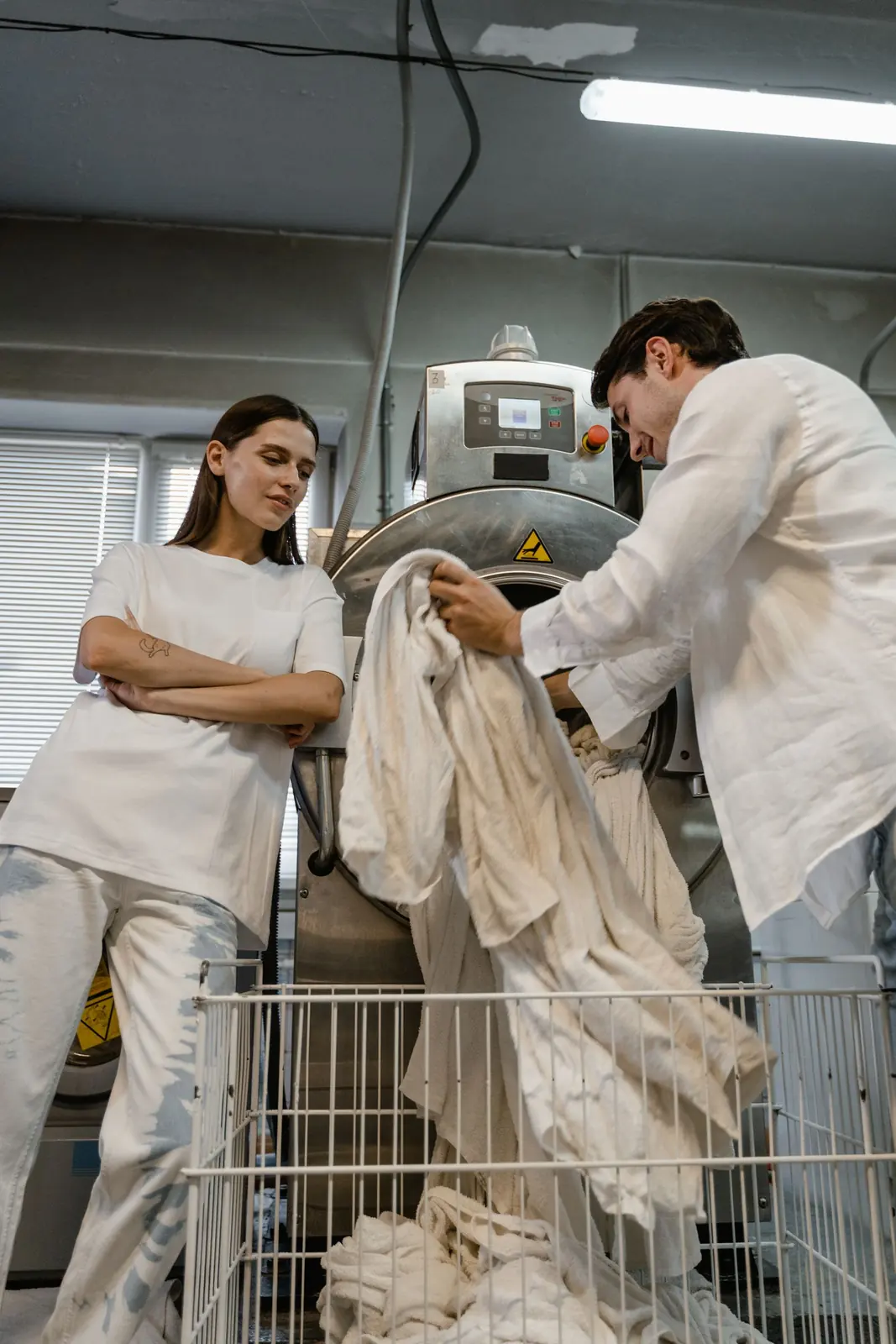
The curtain dry cleaning process has five broad stages: the curtains are inspected and taken down, labelled by window, pre-treated for marks, cleaned in a solvent rather than water, then pressed and rehung. Each stage exists to protect something specific, whether that is the length of the drop, the shape of the pleats or a fragile lining. Knowing what happens makes it easier to prepare your home and to set realistic expectations about stains.
Here is a walk-through of what a careful job looks like from the moment someone arrives at your door, and how it ties in with our curtain dry cleaning in Melbourne.
Before anything comes down: the inspection
A good cleaner looks before they touch. They will check each curtain for the fabric type, lining, heading style and any existing damage, and they may ask you how old the curtains are and whether they have been cleaned before.
Things they are looking for include:
- Sun damage. The leading edges and the lining facing the glass take the most UV. Fabric that tears easily when gently pinched is a warning sign.
- Coating condition. On blockout curtains, any crazing or flaking of the backing is noted before cleaning, not after.
- Stains and marks. Water tide lines, mould spotting, food splashes near dining areas and the grey band where hands draw the curtain.
- Construction. Hand-sewn hems, lead weights, detachable linings and trims all change how the curtain is handled.
This is also when you should mention anything you are worried about. If a pair has sentimental value or was expensive to make, say so up front.
Taking the curtains down and labelling them
Removal sounds simple, but it is where a lot of quiet damage can happen in amateur hands. Hooks are unclipped one at a time so the heading tape is not torn, and heavy panels are supported so their weight does not drag on the seams.
Each panel is tagged with the room and window it came from, and often with which side it hangs on. Two curtains that look identical can differ by a centimetre or two in drop, and swapping them makes a hem look uneven once they are back up. Hooks and gliders are usually left with you or bagged by window.
Layered windows need a little more planning. When a sheer sits behind a heavier drape, both layers are normally removed together so they can be cleaned in the same batch and come back with matching freshness. Detachable linings are separated from the face fabric where that helps, because the two may need different handling. Large panels are folded loosely along their length, never crushed into a bag, so they arrive at the cleaner without hard creases set into them.
What happens during the curtain dry cleaning process?
Once the curtains reach the cleaning facility, they generally move through these steps:
- Dust removal. Loose dust, cobwebs and grit are shaken or vacuumed out first, so they do not circulate through the solvent.
- Colour and fabric testing. A small, hidden area is tested to make sure dyes stay put and the surface does not react badly.
- Spot treatment. Specific marks are pre-treated with products chosen for the stain and fabric. Water-based marks and oily marks need different approaches.
- The solvent clean. The curtains are cleaned in a machine that circulates dry cleaning solvent through the fabric with gentle movement. Because the fibres do not swell the way they do in water, shrinkage and distortion are far less likely.
- Drying and solvent recovery. The solvent is extracted and the curtains are dried at controlled temperatures suited to the fabric.
- Finishing. Each panel is pressed, and pleats are re-set so the folds sit evenly. Hems are checked against the original length.
- Final check. The cleaner looks over each curtain again for any remaining marks before it is packed for return.
Very heavy, interlined or velvet curtains often get extra attention at the finishing stage. Our guide to cleaning heavy drapes explains why those pieces behave differently.
Rehanging and dressing the curtains
Getting the curtains back on the track neatly is the step people notice most. Hooks go back in the original positions, panels return to the windows they were labelled for, and the folds are “dressed”, which means arranging the pleats by hand so they fall in even columns. Some cleaners tie the stack loosely for a short time to help the pleats train back into shape.
The style of heading makes a real difference here. Pinch pleats, eyelets, pencil pleats and wave headings each rehang in their own way, and some need more fiddling than others. We cover this in our post on how curtain headings affect cleaning.
What results to expect
Most curtains come back noticeably brighter, fresher-smelling and free of the dust film that dulls colour over time. That said, an honest cleaner will tell you where the process has limits:
| Issue | Likely outcome |
|---|---|
| General dust and dullness | Usually a clear improvement |
| Recent spills and marks | Often removed or greatly reduced |
| Old, set-in stains | May lighten rather than disappear |
| Deep mould staining | Growth can be cleaned, but marks may remain |
| Sun-faded colour | Fading is permanent; cleaning cannot restore dye |
| Brittle, sun-rotted fabric | Risk of splitting; may not be worth cleaning |
If the cleaner thinks a curtain is too fragile to clean safely, they should tell you before they start, not after.
How to prepare your home
A little preparation makes the visit faster and safer for everyone:
- Move furniture, plants and ornaments away from the windows so there is room for a ladder.
- Clear windowsills, especially of anything breakable.
- Note any curtains that stick or have broken gliders, so they can be checked during rehanging.
- Ask about timing. Curtains are away from the house while they are cleaned, so you may want to plan privacy for bedrooms. Our article on how long curtain dry cleaning takes covers what affects the wait.
Book curtain dry cleaning with us
Melbourne Blinds & Curtains Cleaners takes curtains and blinds down, dry cleans delicate fabrics offsite with gentle cleaning solutions, then returns and rehangs them. We work in homes, apartments, rentals and commercial properties, and you can check whether we cover your suburb on our curtain cleaners near me page. For a free quote, call (03) 9125 4547.